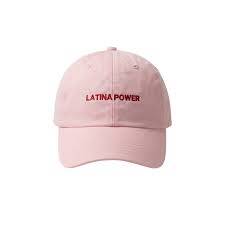
What Is Latina Power?
By Hector Navedo, Ed.D.
July 24, 2026
What is Latina power? The question appears to invite a catalogue of achievements, statistics and prominent names. But beneath it lies a more difficult moral question: What does the United States choose to recognize as power, and whose contributions does it continue to overlook?
The numbers provide one answer. In 2025, approximately 14.5 million Hispanic or Latina women ages 16 and older were employed in the United States. More than 15.2 million participated in the civilian labor force, a participation rate of 59.5 percent. Latina workers were present throughout the economy. Nearly one third worked in management, professional and related occupations. Others worked in services, sales and offices, production, transportation, construction and maintenance. These are not isolated examples selected to support an uplifting narrative. They are national estimates published by the U.S. Bureau of Labor Statistics (2026a, 2026b).
Entrepreneurship offers another measure. The U.S. Census Bureau identified 103,793 employer firms in 2021 that were both Hispanic-owned and female-owned. These were businesses with paid employees, not merely plans, informal projects or aspirations. They were operating enterprises participating in the economic life of their communities (Arledge, 2024).
These facts contradict a prejudice that has endured for far too long: the idea that Latinas stand outside the American project, waiting to be admitted into a country built by others. They do not stand outside it. Their labor, judgment, enterprise and care are already woven into the nation’s daily life.
Yet statistics cannot provide the whole answer. If Latinas deserve equal standing only because they work, own businesses or hold prestigious positions, dignity becomes another market transaction. The Latina who is unemployed, elderly or living with a disability has no less moral worth. Neither does the mother whose unpaid labor remains largely invisible to conventional economic measures.
Equality is not a reward for productivity.
That distinction is central to any serious antiracist argument. Racism is not merely inaccurate because it overlooks the work performed by members of a racial or ethnic group. It is unjust because it assigns human and civic value according to ancestry, skin color, surname, language or accent. It replaces the individual with a stereotype and turns difference into a hierarchy of belonging.
A democratic society should reject that hierarchy completely. It should not do so because Latinas contribute more than other Americans, nor because another group contributes less. Antiracism cannot consist of replacing one ethnic ranking with another. Justice requires abandoning the ranking itself.
Latina power, then, should not mean power over anyone. It is the capacity to act, speak, organize, create and belong without accepting the false demand to become less Latina in order to become more American. It is the freedom to enter a courtroom, a boardroom, a construction site or a public school without treating one’s heritage as an apology.
Sonia Sotomayor represents one visible expression of that power. Millions of others exercise it without recognition. Their names may never appear in history books, but their decisions shape workplaces, families, businesses and neighborhoods every day.
The moral test for the United States is not whether it is willing to celebrate exceptional Latinas. Nations often applaud exceptional individuals while continuing to disregard the people from whom they emerged. The harder test is whether America accords equal dignity to ordinary Latinas, including those who never become judges, executives, entrepreneurs or public figures.
No one should have to prove that she has worked hard enough, earned enough or assimilated enough to belong. Belonging is not diminished by an accent. Citizenship is not reserved for a single racial inheritance. Human dignity does not increase with a paycheck.
What is Latina power? It is measurable participation, certainly, but it is also something more fundamental. It is the refusal to accept a nation in which some people must continually justify a place that equality already promises them.
References
Arledge, R. (2024, October 10). A profile of the nation’s Hispanic-owned businesses. U.S. Census Bureau. https://www.census.gov/library/stories/2024/10/hispanic-owned-businesses.html
U.S. Bureau of Labor Statistics. (2026a). Employment status of the Hispanic or Latino population by sex, age, and detailed ethnic group: 2025 annual averages [Table 6]. U.S. Department of Labor. https://www.bls.gov/cps/cpsaat06.htm
U.S. Bureau of Labor Statistics. (2026b). Employed people by occupation, race, Hispanic or Latino ethnicity, and sex: 2025 annual averages [Table 10]. U.S. Department of Labor. https://www.bls.gov/cps/cpsaat10.htm